Key features
- Solar, grid and storage in one system plan
- Selectable backup circuits
- Energy management through compatible inverter controls
- Battery capacity matched to use and budget
Solar generation, grid access and battery storage coordinated in one flexible system.
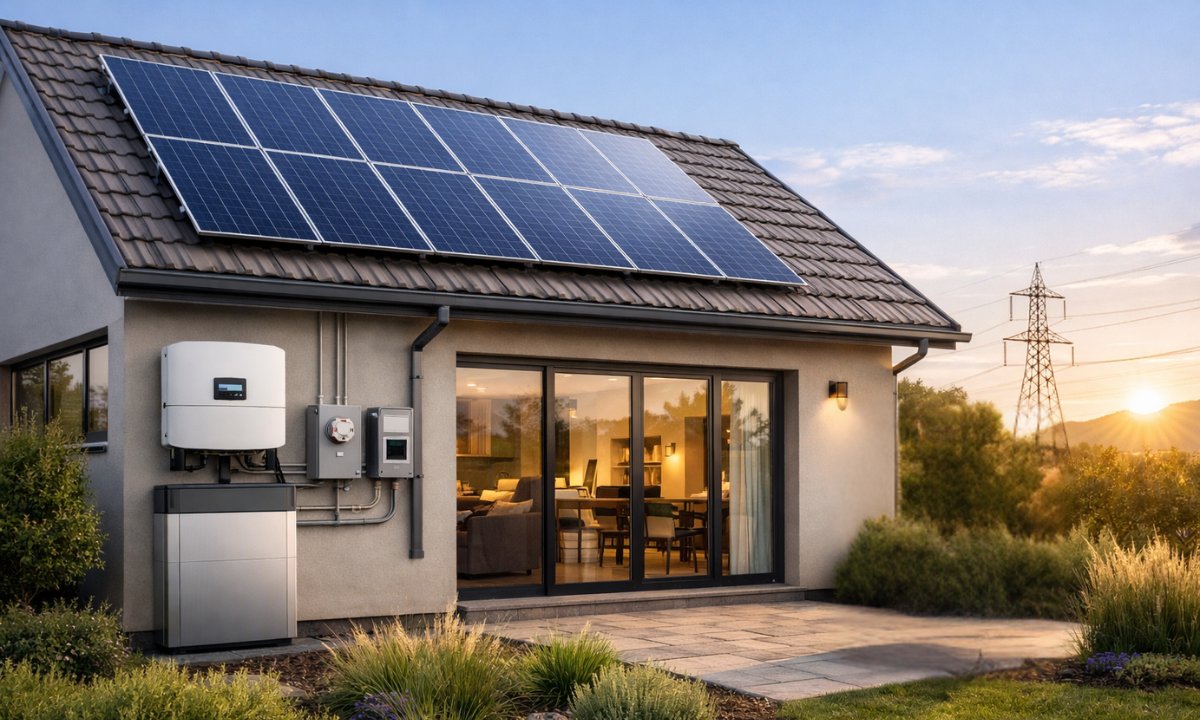
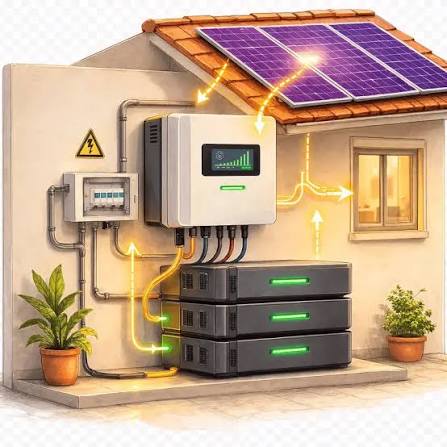
A hybrid solar system brings together solar panels, a compatible inverter, the utility grid and battery storage. Depending on the equipment and settings, it can prioritize solar use, store excess energy and supply selected loads from batteries during an outage.
Hybrid operation depends on inverter capability, battery compatibility, system design and local regulations. The backup circuits and expected runtime should be identified during planning; battery backup is finite and varies with the connected load and usable storage.
Request an assessmentThe hybrid inverter manages solar production, building loads, battery charging and grid exchange according to its programmed settings. If the grid fails, only circuits wired for backup and within the inverter and battery limits can remain powered.
Choose a hybrid solution when storage and backup matter alongside grid-connected solar. A design review should establish priority circuits, battery runtime expectations and any utility interconnection conditions.
System performance, availability and approvals vary by equipment and location. A site-specific assessment is recommended before purchase.
A grid-connected solar solution designed to help homes and businesses use more of the power they generate.
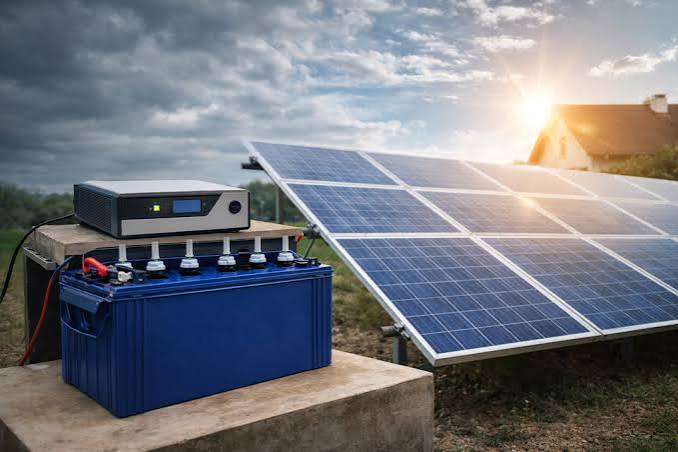
Energy storage designed to retain compatible solar electricity for later use or selected backup loads.
Inverter options that convert solar DC power into usable AC electricity and manage system operation.
Get clear answers about system options, installation and the next step.